Guards and access
Frames, panels, doors, tunnels, apertures, supports, finishes, fixings and site fitting.

Planning and budgeting
Understand the scope, access, materials, controls, installation and shutdown factors that determine the cost of upgrading guards on existing machinery.
Cost is shaped by the number and size of hazards, guard material, access doors, interlocks, safety-control changes, site installation, shutdown constraints and required documentation. Photographs and dimensions can support an early budget, but integrated projects normally need a site survey.
A low initial fabrication price can become expensive if it excludes installation access, controls interfaces or the work needed to return the machine to production. A useful quotation states the boundary, assumptions and deliverables.
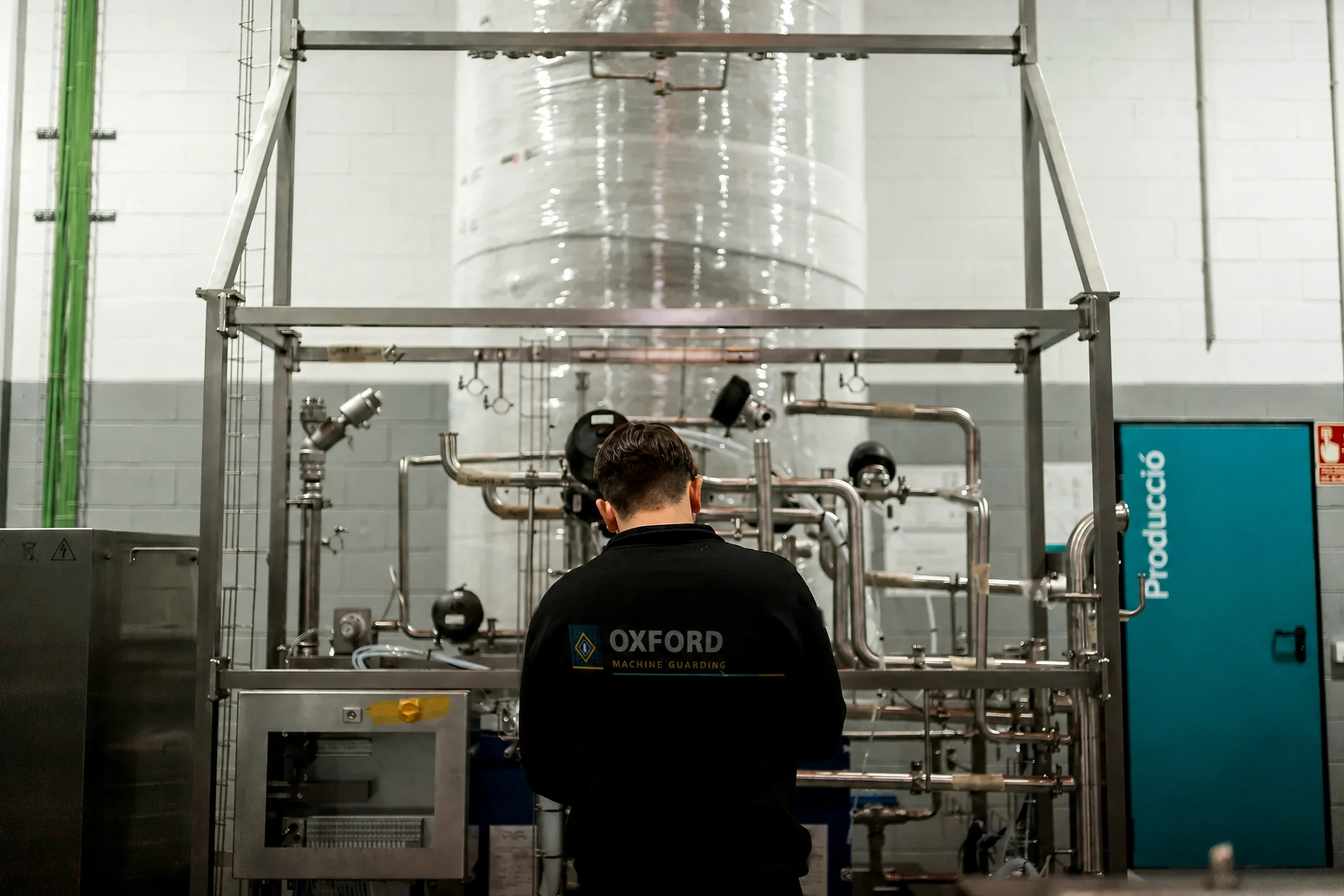 Better survey information reduces uncertainty in scope, programme and budget.
Quotation structure
Frames, panels, doors, tunnels, apertures, supports, finishes, fixings and site fitting.
Devices, wiring, relays or PLC interfaces, reset, restart, emergency stops and diagnostics.
Survey, design, manufacture, installation labour, travel, testing, drawings and handover records.
A better enquiry
Send wide and close photographs, a short video where safe, and any layout or manual.
Explain the hazard, operator task, cleaning, maintenance and why access is needed.
Share existing assessment actions, site standards, location and available shutdown.
Use a site visit to confirm interfaces and reduce allowances where the project is integrated.
Questions customers ask
There is no reliable single price because scope can range from one measured fixed panel to a line-wide guarding and controls project. Access, material, interlocks, controls, installation, shutdown and evidence all affect cost.
Useful inputs include photographs, overall dimensions, hazard locations, access tasks, machine and control details, site location, previous assessments and the available shutdown window.
Yes, where responsibilities and interfaces are clear. A phased route can begin with survey and concept, then move to detailed design, manufacture, installation and testing.
Useful next steps
Provide machine, hazard, access, controls and shutdown information for a better-defined scope.
Retrofit site survey →Understand design, manufacture, controls integration, installation, testing and handover.
Complete retrofit service →Send photographs, location and timescale so the engineering team can define the next step.
Request an engineering review →Start with the machine and the task
Tell us the machine, hazard, access requirement, site location and target shutdown. We will help define the most useful first step.