Transmission covers
Fixed covers around motors, chains, belts, sprockets and couplings, with controlled maintenance removal.

Existing conveyor and line upgrades
Safeguard drives, rollers, transfer points, underside access and product openings while keeping the conveyor cleanable, maintainable and useful to production.
Typical areas include drives, head and tail drums, nip points, rollers, transfers, underside return routes and openings where a person could reach hazardous movement.
More than a motor cover
Conveyors create changing interfaces: product transfers, powered rollers, drums, chains, belts, diverters, machine infeed and access from floor level. A guard added at one point can leave another route to the same hazard.
We review how operators load, inspect, clear and clean the conveyor, then develop fixed panels, local covers, tunnels, interlocked access or protective devices to suit the line.
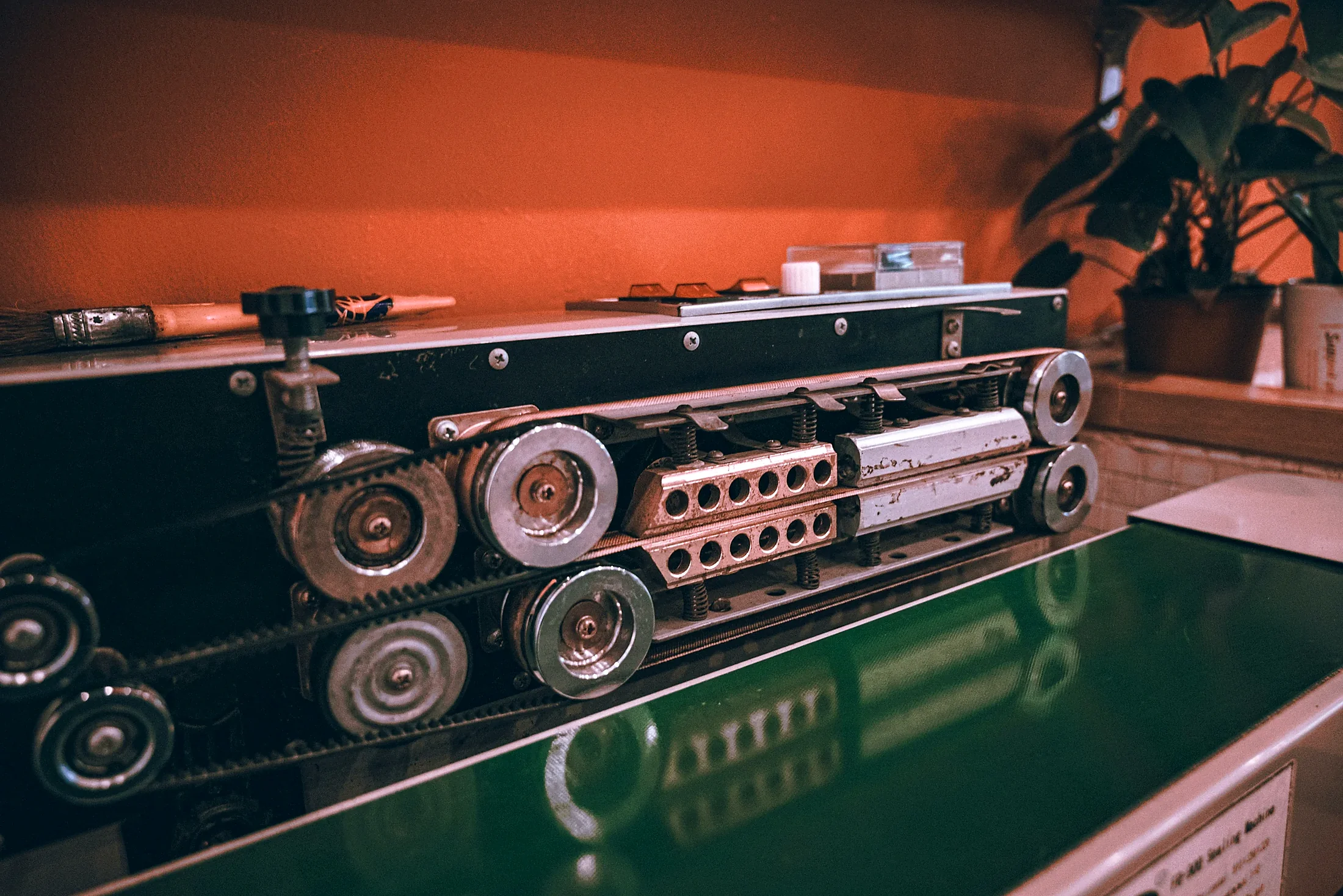 Every nip point, access route and connected machine interface is considered.
Typical upgrade areas
Fixed covers around motors, chains, belts, sprockets and couplings, with controlled maintenance removal.
Guarding for in-running nips and exposed rotating components at conveyor ends and tensioning areas.
Custom panels, tunnels and infills where conveyors meet other conveyors, machines, elevators or workstations.
Prevention of reach or accidental entry beneath elevated belts, rollers and moving return components.
Designed openings that pass the product while limiting access to the hazard, including distance and tunnel depth.
Fixed or interlocked access for cleaning, belt tracking, clearing and maintenance according to task frequency.
Operational design
Review size, accumulation, rejection, transfers and jams across normal product variations.
Observe loading, cleaning, clearing, tracking, inspection and maintenance interventions.
Separate areas that can remain fixed from those needing controlled or interlocked entry.
Verify connected-machine stopping, reset and restart behaviour where the guarding spans a line.
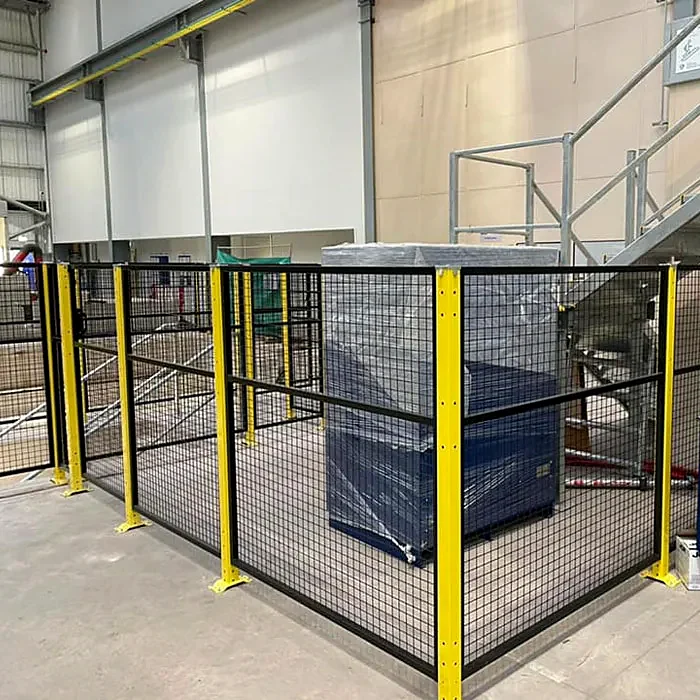 Perimeter sections and local covers can be combined across a complete line.
Line modifications
A new conveyor height, product opening, transfer, accumulation zone or speed can invalidate the previous guarding assumptions. Retrofitting is an opportunity to resolve old access problems at the same time as the line change.
Useful next steps
Coordinate conveyor guarding with cleaning, blockage clearing and access across the connected line.
Packaging line upgrades →Use tool-controlled guarding where routine access to the hazardous movement is not required.
Fixed guard retrofits →Review stopping time, reset and restart behaviour where people need regular access.
Interlocked guard upgrades →Conveyor guarding problem?
A short video can help explain movement, product flow and the way operators clear or clean the conveyor.